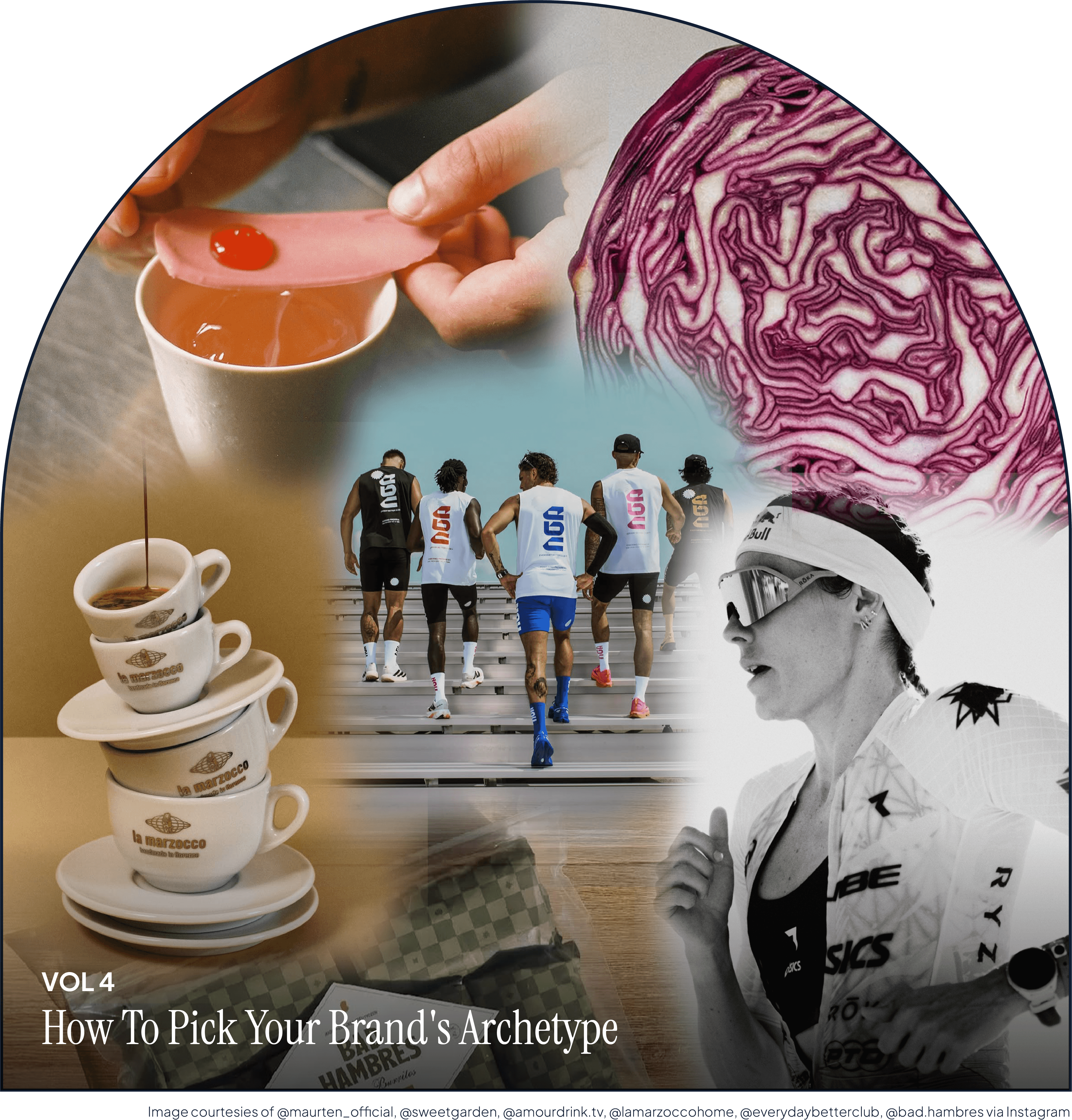
Volume 4: How To Pick Your Brand’s Content Archetype
In today’s edition from House of Distribution, we’re talking about brand content archetypes. And the importance of defining and establishing the archetype you want to create in 2026. There are seven primary archetypes we’re going to cover.
Plus, how many you should pick based on your current success on Instagram.
And thank you to beehiiv, who helps us bring this to life.
House Recommendations: beehiiv
The Majority Of Brands Treat Email Purely As A Transactional Channel. New products. Discounts. Launches.
It works, kind of.
But it also turns your inbox into a place people skim, not somewhere they actually want to be.
The brands winning in 2026 are using newsletters differently. And they're building it all on beehiiv.
beehiiv lets you speak directly to an audience you own, sharing real perspective, and turning that attention into a real revenue channel.
With a newsletter on beehiiv, you can monetize without relying on algorithms or third-party platforms. There are paid subscriptions for your most loyal fans. Built-in sponsorships with global brands through the beehiiv Ad Network. Digital products like guides, templates, or early access offers that live right inside your content.
Some of my favorite examples of newsletters building real audience relationships:
- Bandit Running’s B-Mail breaks down campaigns, moodboards, and creative decisions.
- Flamingo Estate’s Letter from the Garden feels like a personal note from the founder’s backyard.
And from there, the monetization plays are endless:
- A paid newsletter just for your top 1% customers.
- A behind-the-scenes series that sponsors want to be part of.
- Digital products launched directly to your most engaged readers.
All of this is what beehiiv is built for. It’s what powers my own newsletter, and it’s how brands are turning email into a real business, not just a marketing channel.
If you’re curious about how beehiiv can take your content (and revenue) up a notch, try it yourself with code ALEX30 for 30% off your first three months.
If today were the day you were going to start taking content seriously, then my advice would be to define and establish one very specific brand archetype your content will amplify.
Here’s why.
Your brand archetype establishes:
- How your content positions your brand
- How it aligns your brand with a larger meaning
- Consistency across all content
- A clear content expectation
Let me explain.
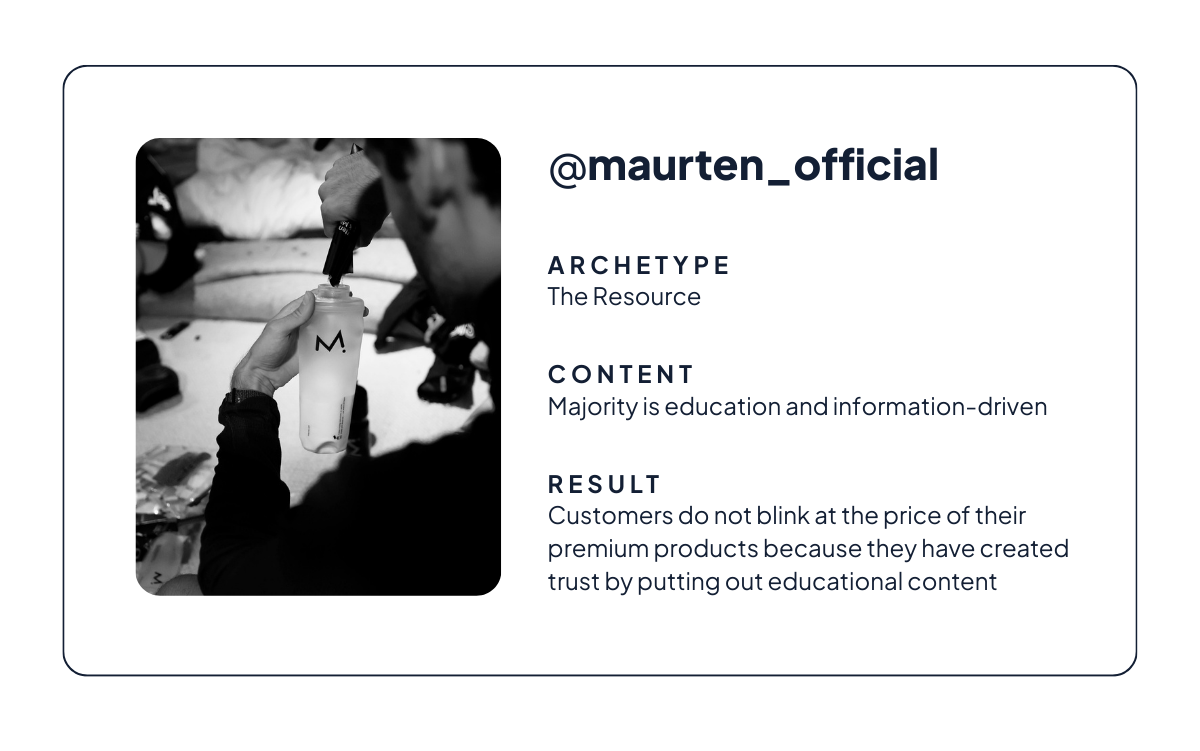
Maurten is one of the best performance supplement brands in the endurance space. All of their products are scientifically driven and extremely performance-driven for the top 1%.
On their site, you can find some of the best fuel guides and training guides on the internet.
This positions their brand archetype as The Resource.
The resource is the brand positioning itself as the educational guide, with the majority of its content being very educational and information-driven.
And this is the right positioning play for Maurten.
Their product is premium on the market. It commands a higher price point. Therefore, putting out the best informational/educational content will position themself as the top resource of information within the category to create the trust needed for customers not blink at the price.
That’s the importance of Archetypes.
And there are seven of them.
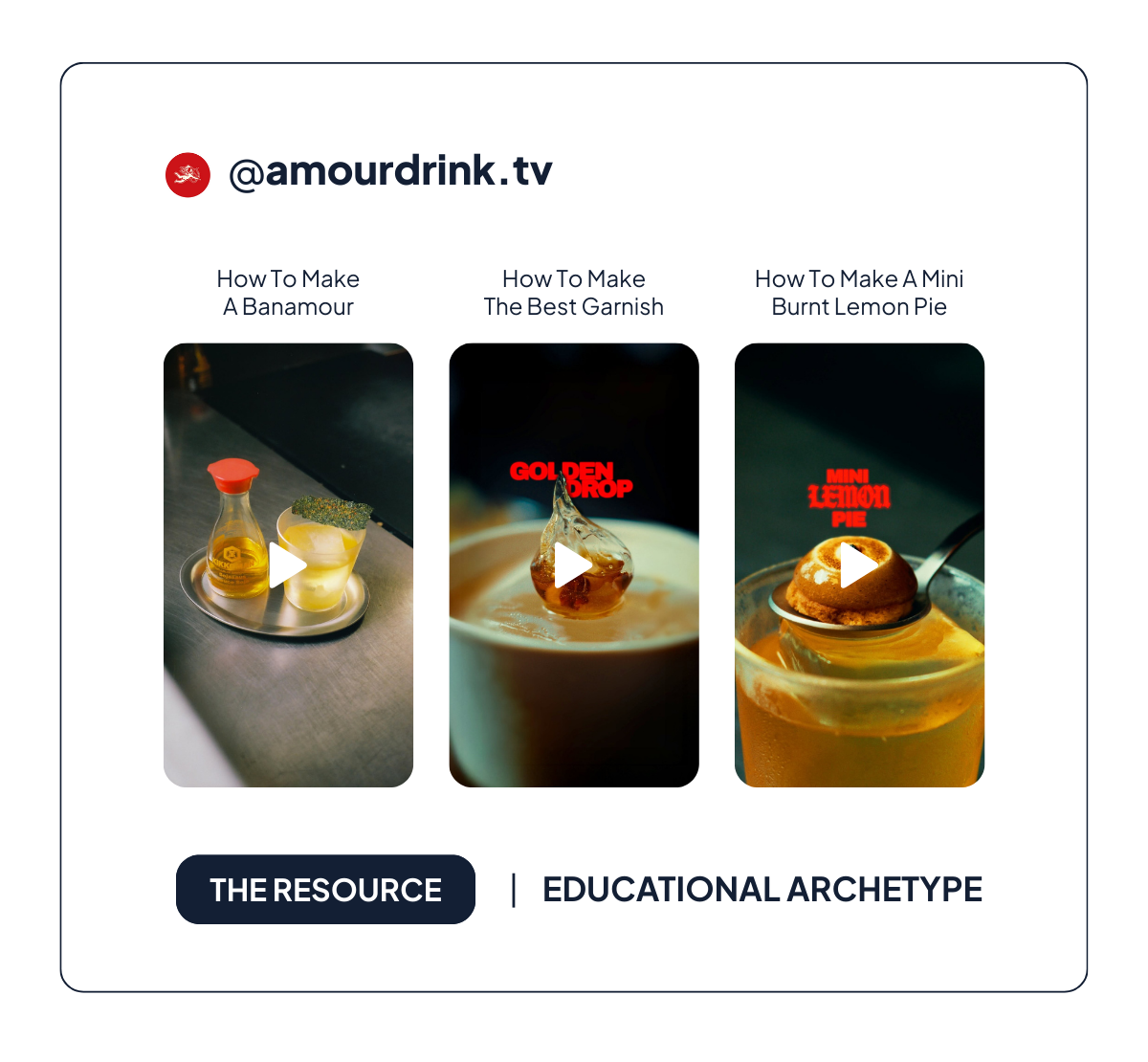
1. The Resource | Educational Archetype
To re-iterate, the resource is the brand positioning itself as the educational guide, with the majority of their content being very educationally and information driven.
The viewer needs education/information around X. You consistently create educational/informational content about X.
To the point that you’ve become their go-to resource for X.
Amour Drink TV is a great example of content positioning itself as the resource through edu content.
Go through their content, and you’ll notice 80-90% of their top content is “How to” or “How we do it” content.
2. The Everyday Identity | Lifestyle Archetype
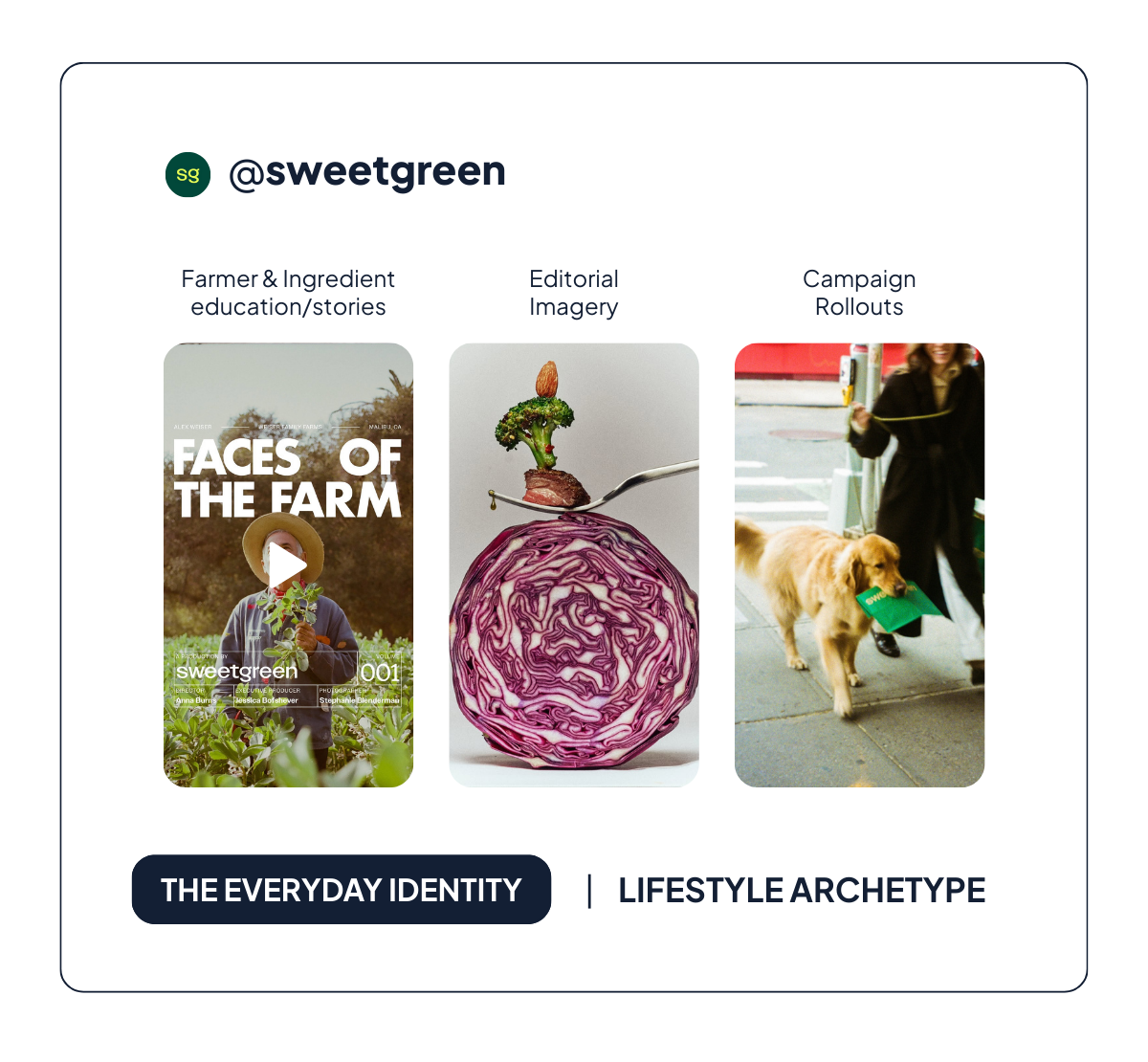
The everyday identity is the brand using content to not promote a product but to promote a certain type of lifestyle, targeting a very specific type of individual, therefore influencing their lifestyle to integrate their product.
Say that three times fast.
Sweet Green executes this to a T. The lifestyle they’re targeting is the individual who cares about their food, body, health, and daily optimization.
They do this through a mix of formats:
- Farmer & Ingredient education/stories
- Editorial Imagery
- Campaign Rollouts
By doing so, their content creates a lifestyle identity people want to associate with, and the only way for customers to show that is by… eating Sweetgreen.
3. The Becoming | Aspirational Archetype
The becoming is the brand using content to position itself through an aspirational lens. It’s for the individual who aspires to attain the product because the product is the pinnacle of the category and therefore the ultimate status symbol.
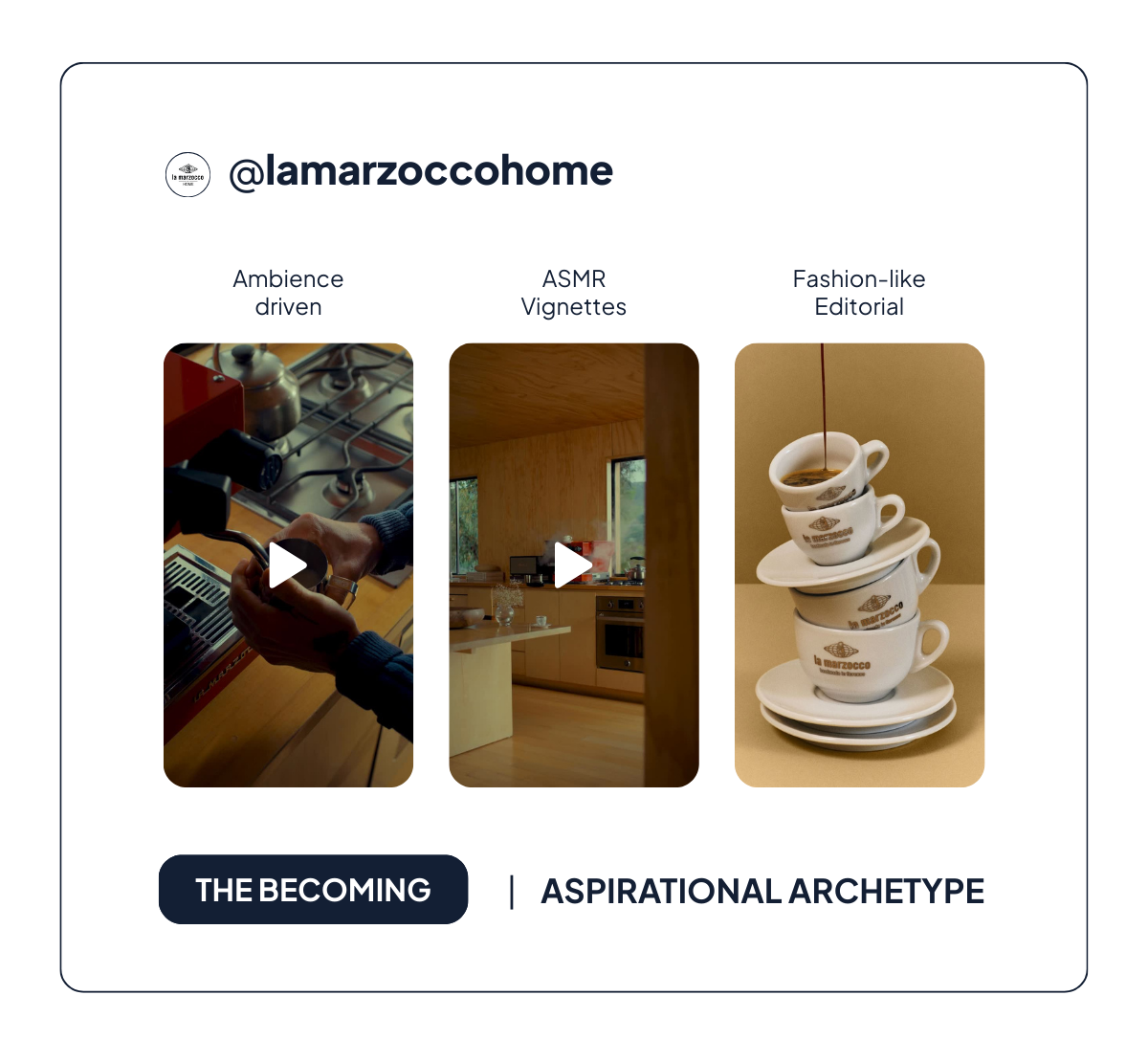
Look at La Marzocco’s content. Their throughline is the “home barista”, so their content plays into the aspirational perception that owning a La Marzocco espresso machine makes them a home barista.
Here’s how they do with their content:
- Ambience-driven slow morning ritual
- ASMR Vignettes w/ emphasis on sound
- Fashion like editorial imagery
But the key is publishing these content pillars consistently. Look at their last 30 pieces of content, look at the top performers, and it’s made up of these three concepts.
4. The 1% Better | Inspiration Archetype
The 1% better is the brand that uses content to inspire their audience by sharing their pov, mindset, values, and approach to life to position the brand and product as the bridge to the person they want to become.
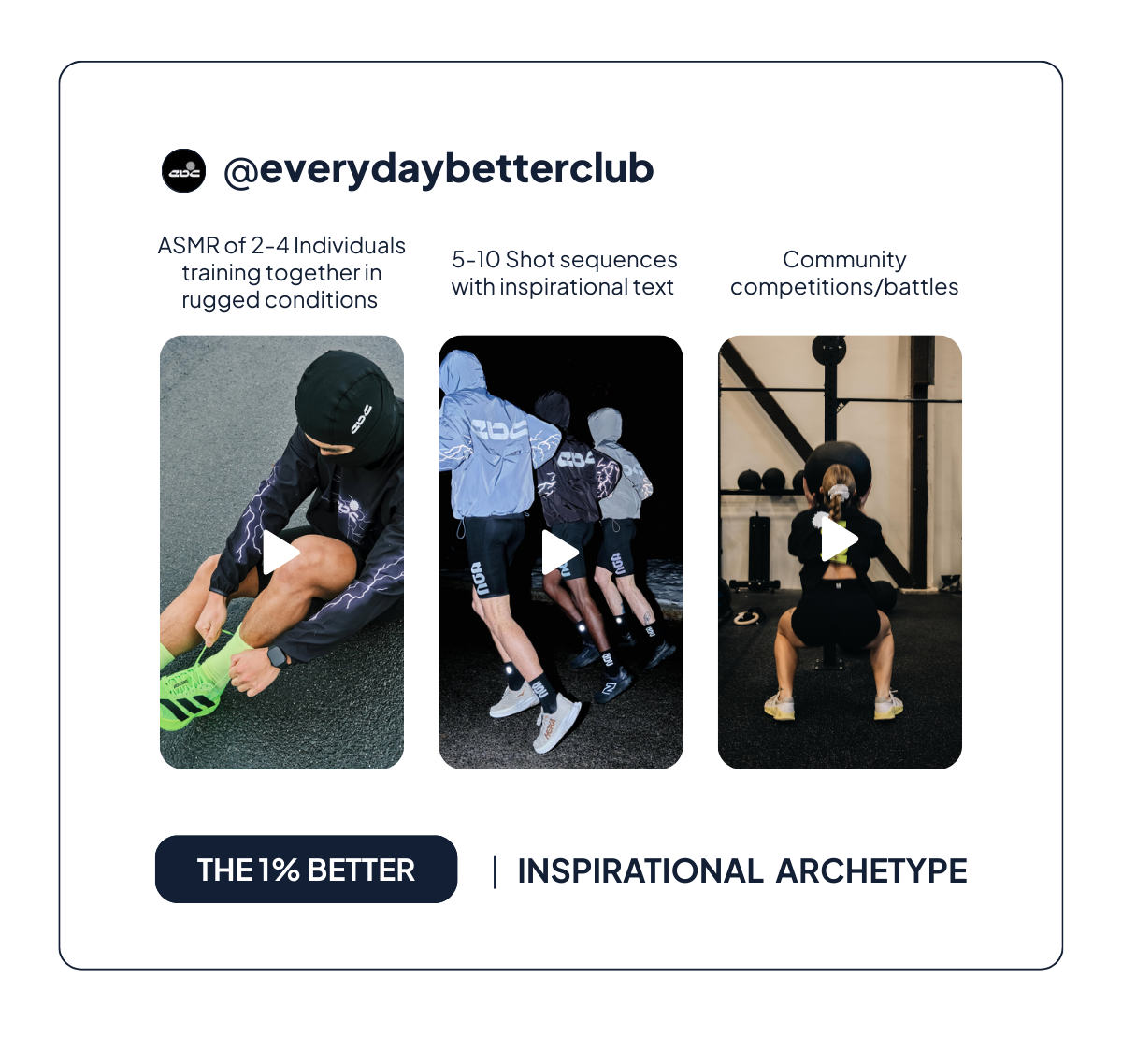
One of my favorite brands owning the “inspirational archetype” right now is Everyday Better Club, founded by my friend Kevin Vu.
Here’s how they do it with their content:
- ASMR of 2-4 Individuals training together in rugged conditions
- 5-10 Shot sequences with inspirational text
- Community competitions/battles
5. The Voyager | Documenter Archetype
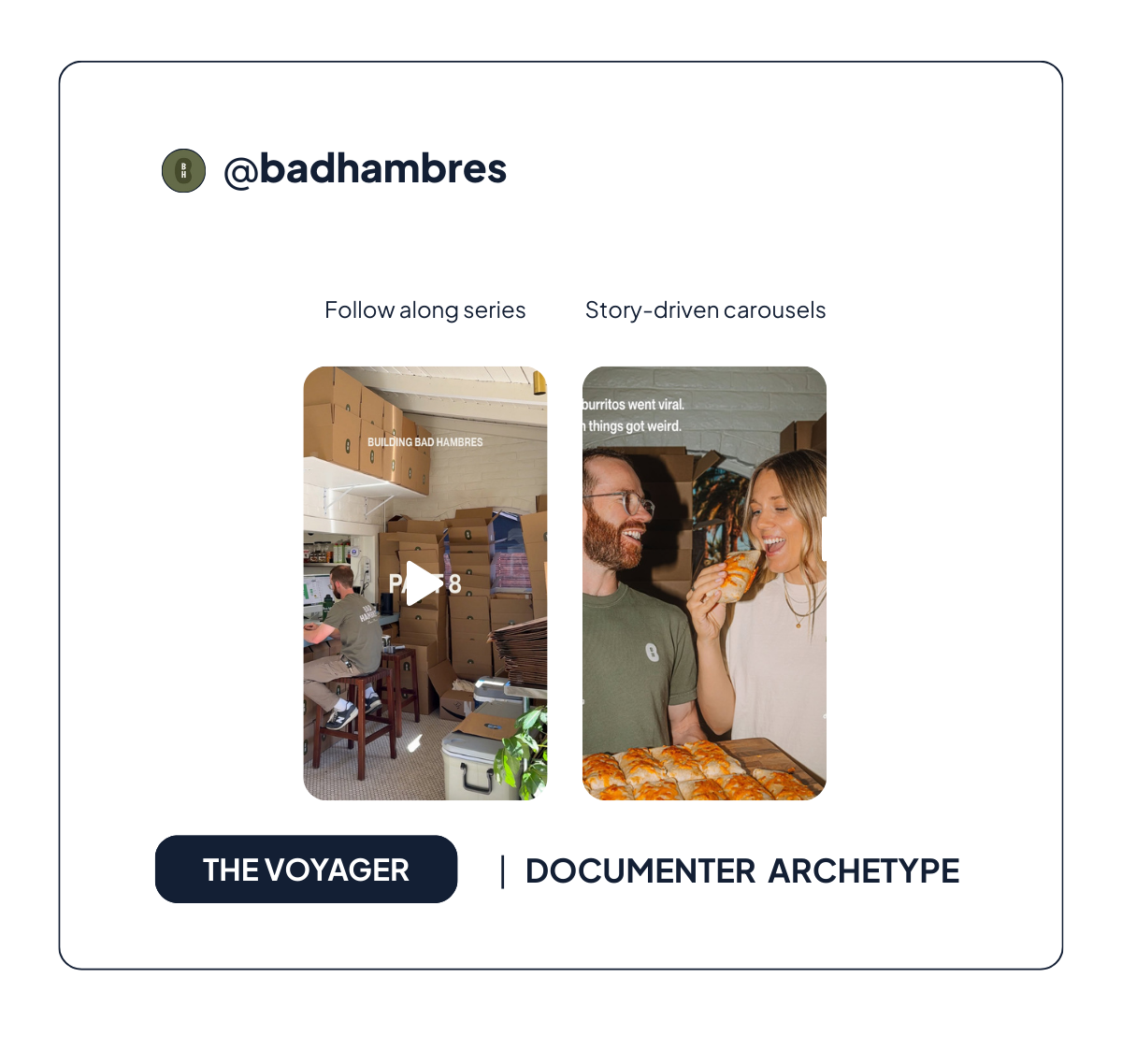
The voyager is the brand that uses content to document their day-to-day, the ups and downs, and everything in between. And the content serves as a front row seat into the journey they’re sharing on social to invite people to follow along for the ride.
Two of my favorite brands doing this right now are Bad Hambres and Softies Burgers.
- Bad Hambres does this through two primary concepts:
a. Follow along series
b. Story-driven carousels
- Softies Burgers does this through one specific series:
a. Building A Restaurant Series
But they have one specific topic or theme they walk you through during an episode.
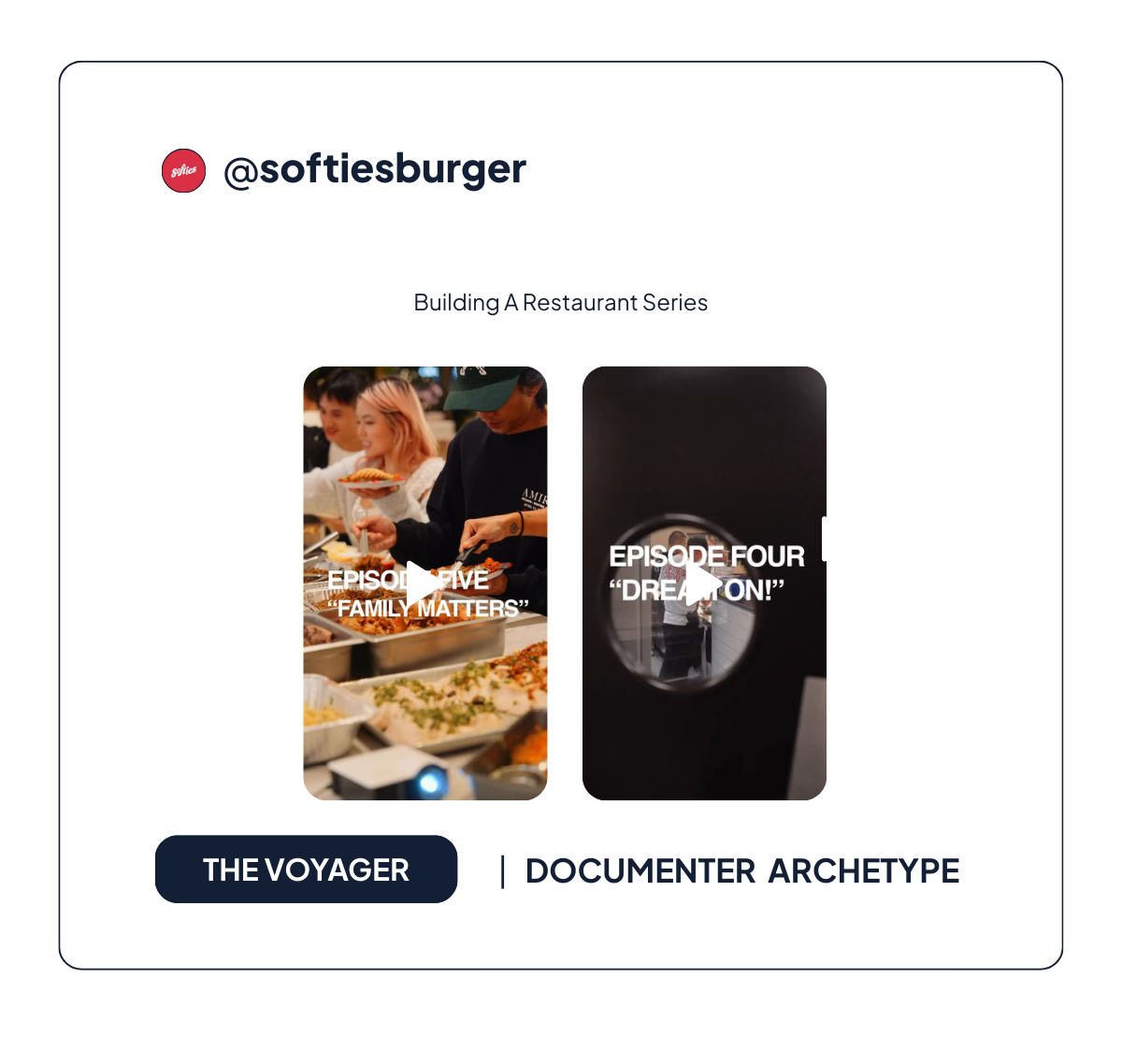
The key with the voyager archetype is to lean into personal storytelling, relatability, and vulnerability to create suspense, tension, and an emotional attachment.
Watch the content and see exactly how they leverage the hero’s journey in each episode.
6. The Performer | Entertainment Archetype
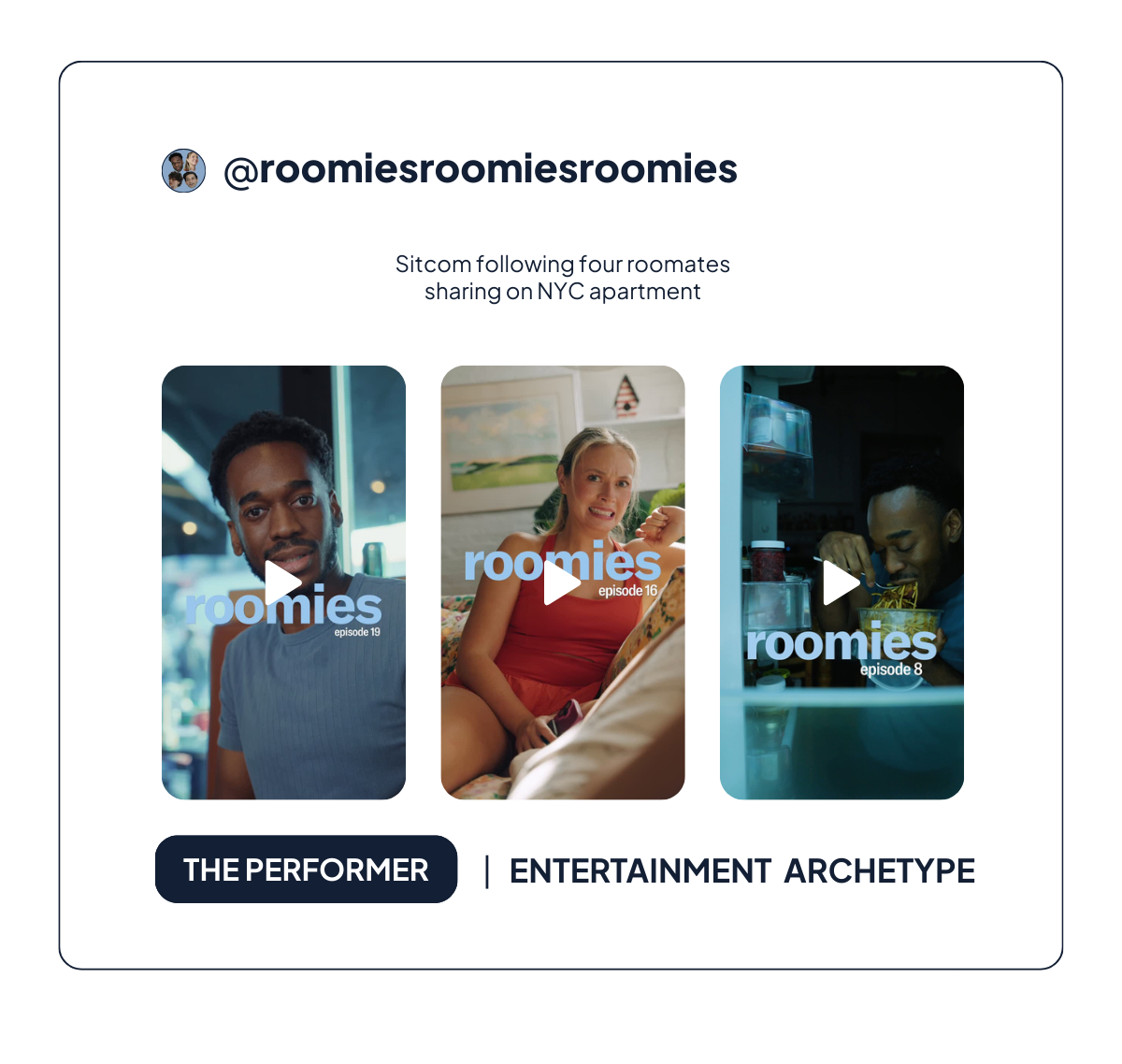
The performer is the brand that uses content to entertain their audience. Their content is performative, personality-driven, and character-driven.
Two of my favorite brands are doing this right now:
- Bilt’s RoomiesRoomiesRoomies account through one specific series:
Sitcom following four roommates sharing one NYC apartment
- NitroBar’s signature series:
“What would you make me if” series featuring their founder, employees, and customers.
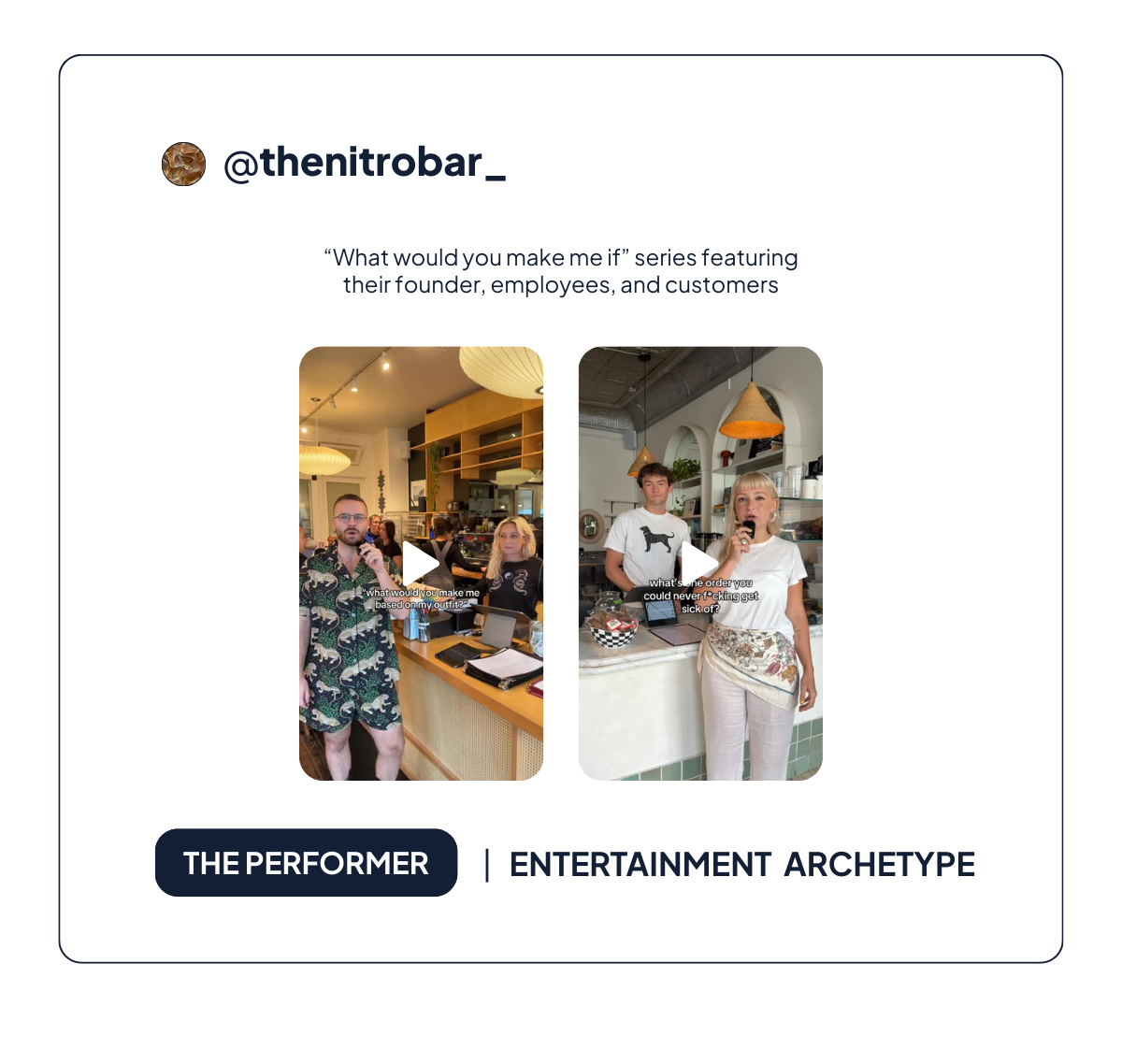
All content that creates a “let me get my popcorn” reaction because of its bingeability.
7. The Make Belief | Fictional Archetype
The make belief archetype that plays into a fictional world and develops fictional characters and leverages the content to get viewers to immerse themselves in it.
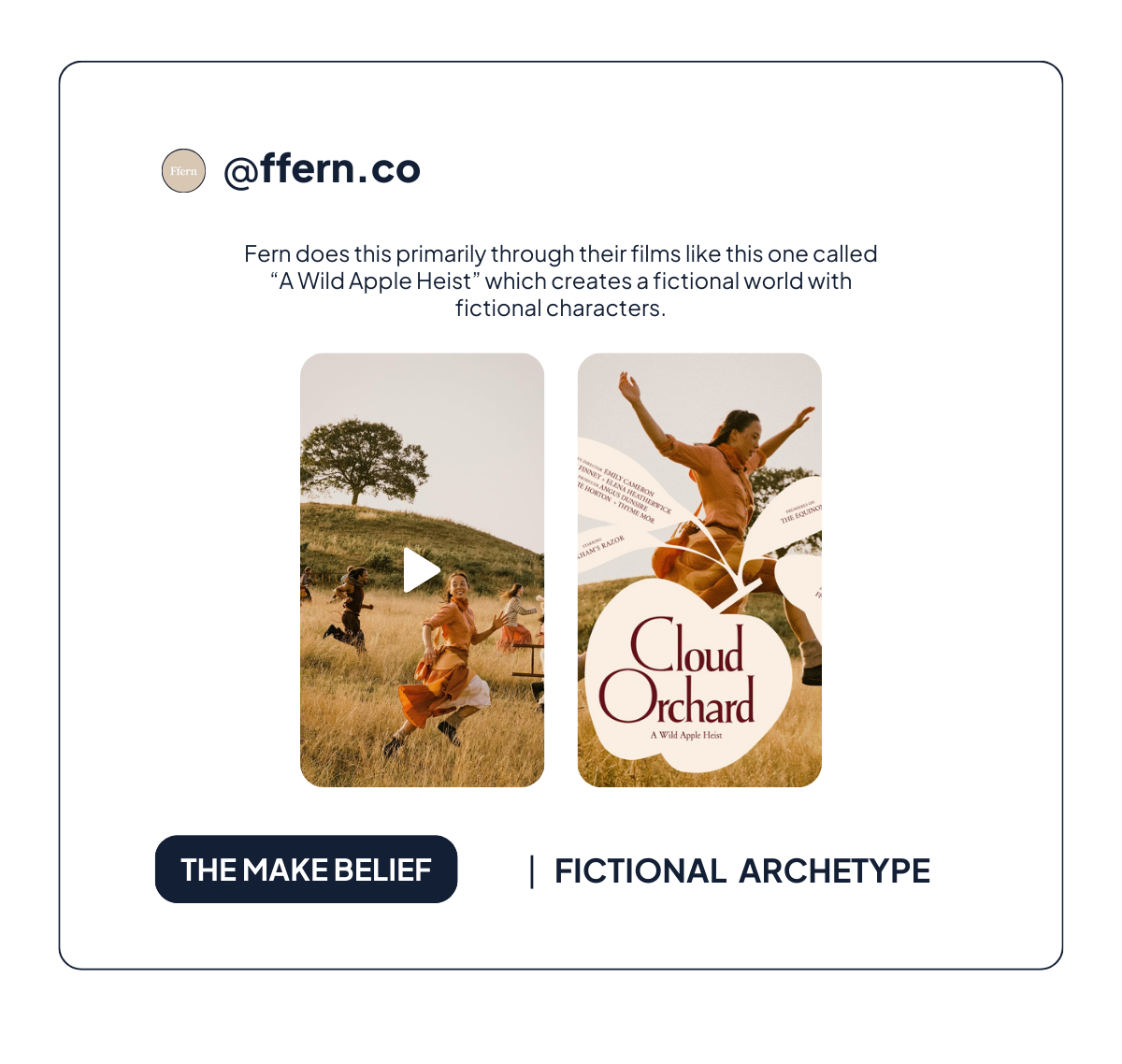
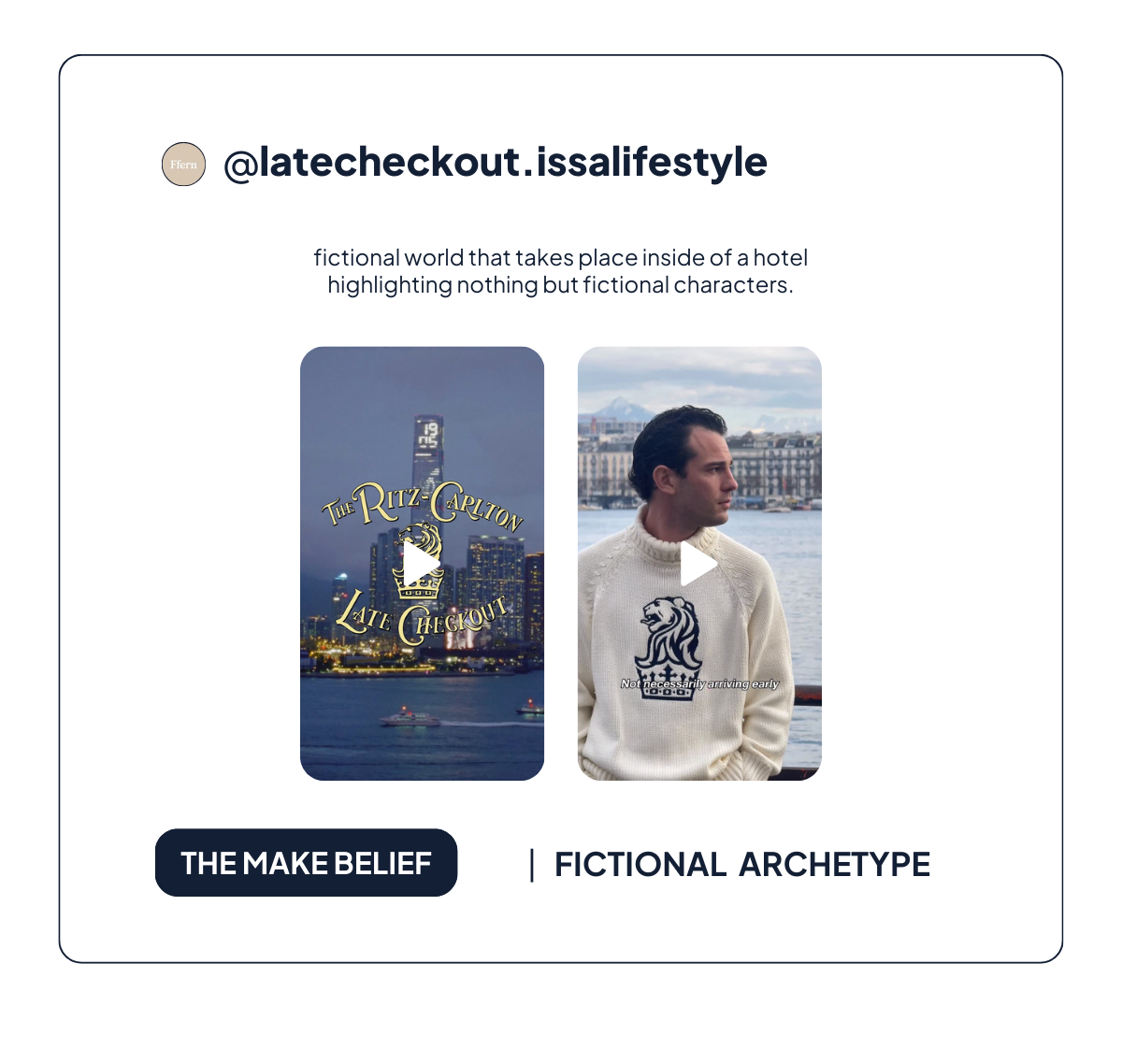
Two brands doing this at an exceptionally high level are Fern and Late Checkout.
Fern does this primarily through their films, like this one called “A Wild Apple Heist,” which creates a fictional world with fictional characters.
On the other end, Late Checkout’s entire content strategy is built around a fictional world that takes place inside a hotel, highlighting nothing but fictional characters.
How To Pick Your Brand’s Archetype
There are three questions you need to ask yourself here:
- What emotion do I want to connect to my brand and product?
- How do you want to be positioned and perceived in the market/category?
- What role do you want to play in your audience’s life?
At the intersection of those three questions will be the right archetype.
And yes, elements from other archetypes will bleed into each other.
How Many Archetypes Should I Create?
This answer is based on where you’re at as a brand.
There are three levels:
- Beginner - No winning OR only a few winners, but not growing consistently.
- Intermediate - Winning strategy with the potential to grow faster.
- Advanced - Category leader gunning for the number one spot.
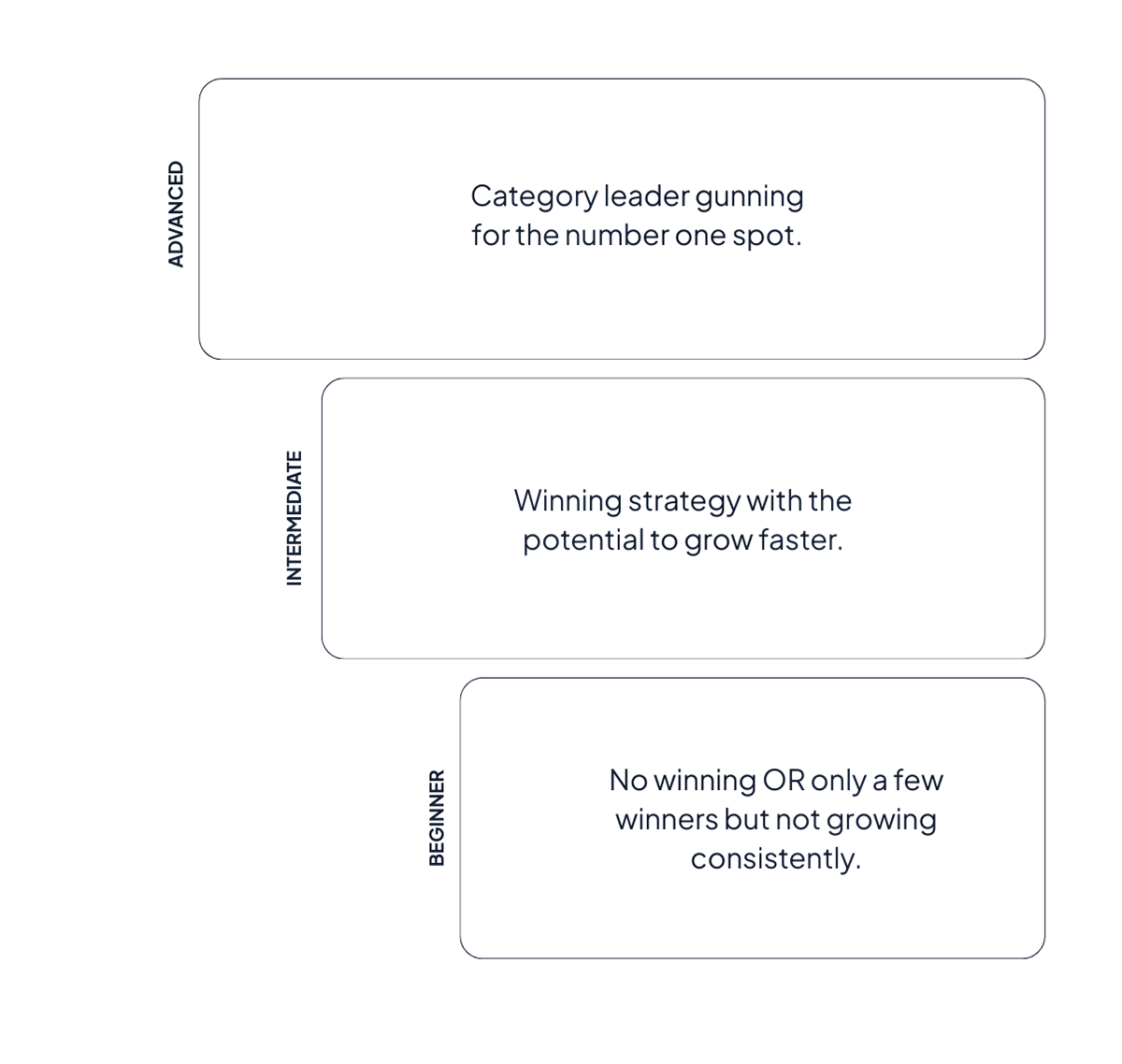
You’ll determine the amount of brand archetypes based on the level you categorized yourself in.
- If you classified yourself as a beginner: Pick one archetype and test as many concepts and formats as possible until you find outliers, then scale rapidly.
- If you classified yourself as an intermediate: You’ve successfully scaled one archetype, and you’re primed to add a second.
- If you classified yourself as advanced: You know what works, you know how to get things to work, and now it’s about your ability to scale based on your budget and bandwidth.
Final Notes From The House
- If you feel like you lack stories for your brand, then watch this video.
- If you want the full playbook to win on IG in 2026, then watch this video.
Until the next letter,
Alex Garcia | House Of Distribution